
Art for Human Rights helps to spread the message of human rights ‘from the arteries to the capillaries’, to quote Seamus Heaney
“We are here not so much for a cause as for a credo. Art for Amnesty, who sponsor this event, represents a disposition rather than a party line. And the disposition is this: we are disposed to believe that the work of artists helps to create our future. We believe that the effort of creative individuals can promote a new order of understanding in the common mind, an understanding that precedes and prepares for the establishment of new social conditions”.
“Art that is fully alive to reality and fully truthful in its response is, after all, exactly what the Russian poet Marina Tsvetaeyva once called it, namely, ‘art in the light of conscience’. Art does not issue from a sense of duty. It is one of the rewards of inner and outer freedom, one of the symptoms of a well doing commonwealth. The writer’s quill and the minstrel’s harp are insignia of the liberated spirit and are recognised as such, instinctively. Speaking artistically, speaking conscientiously, the pen is not in the end all that light. It carries its own weight of responsibility; it puts us under pressure, and it asks us to take the strain of standing our ground in the indicative mood of the truth.”This remains the Art for Human Rights disposition and credo and informs all Art for Human Rights’ projects. We don’t conduct research or publish reports or document human rights abuses. We rely on the expertise, integrity and competence of the human rights NGO’s and INGO’s we work with to provide the expertise and the messaging around a given human rights cause or issue that we work with artists to promote.
Art for Human Rights was originally created in 2002 as Art for Amnesty by human rights lawyer and life long Amnesty International member Bill Shipsey.
Shipsey, who joined Amnesty International in the late 1970s, was inspired in part by the activism of entertainers, who performed at the Monty-Python-esque Secret Policeman’s Ball benefit show, wanted to bring together artists from all corners of the world to lead projects that would contribute to the organisation’s work.
Shipsey conceived and created the Ambassador of Conscience Award in 2003 for Art for Amnesty, inspired by the poem “From the Republic of Conscience”, written by Irish poet Seamus Heaney for Amnesty International in 1985. The Award has been bestowed on such diverse activists as Nelson Mandela, Malala Yousafzai, Harry Belafonte, Václav Havel, Joan Baez, Ai Wei Wei, Peter Gabriel, U2 and most recently Greta Thunberg. The award ceremonies were organised, funded and presented by Art for Human Rights (then Art for Amnesty) from 2003 to 2015.
Over the years, Art for Human Rights has led dozens of projects involving artists of all disciplines including musicians, painters, sculptors, and writers. These include Instant Karma, Amnesty’s multi-star, Grammy nominated benefit album of John Lennon compositions; the Small Places Tour, a 2008 music concert project which partnered with over 800 concerts in some 40 countries worldwide, and Electric Burma a concert held on 18 June 2012 in honour of Burmese leader Aung San Suu Kyi featuring Bono, Damien Rice, Lupe Fiasco, Bob Geldof, Angelique Kidjo, and many others.
In 2012, we began to work with internationally acclaimed Aubusson Tapestry maker, Ateliers Pinton. Since then, they have created 14 monumental tapestries designed by Fernando Botero, Sofía Vari and Peter Sís.
In 2017, we launched Eleanor’s Dream, a one-year artist led project to mark the 70th Anniversary of the Universal Declaration of Human Rights (UDHR) and to celebrate the achievement of Eleanor Roosevelt in its creation and adoption. Internationally acclaimed singer songwriter Damien Rice performed a sell-out acoustic concert in the Olympia in Paris on 11 December.
In 2018, we began to work with internationally recognised Azulejo maker Viuva Lamego in Lisbon to produce Azulejo murals, the traditional Portuguese majolica glazed tiles. We partnered with Peter Sis and the City of Lisbon to create a large Azulejo mural to commemorate the 70th Anniversary of the UDHR. The 15 square meter mural of Sis’ drawing “Si morg” was unveiled on 10 December 2018, on Human Rights Day, by Katerina Vaz Pinto, the cultural counsellor of the city of Lisbon.
Today, Art for Human Rights is involved in a number of projects, expanding collaborations with artists and human rights organizations across the world.

Bill Shipsey is a multifaceted Irish human rights activist, retired barrister, artist event promoter, producer, and consultant. As the founder and Executive Director of Art for Human Rights (formerly Art for Amnesty), he spearheads an organisation that leverages the transformative power of art to champion and safeguard human rights. Shipsey’s commitment to Amnesty International dates back to 1977, and throughout the years, he has been a driving force in advancing human rights causes through artistic expression.
His noteworthy contributions include conceiving and establishing Amnesty International’s Ambassador of Conscience award in 2003. In 2007, he served as the co-executive producer of Instant Karma, a benefit album featuring renditions of John Lennon compositions by renowned artists. Shipsey co-founded Art 19, a company created to raise funds for Amnesty International and human rights through the sale of original prints by the world’s foremost contemporary artists.
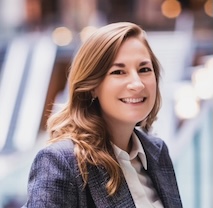
Jenna brings over a decade of experience in research, quantitative analysis, and project management. She began her career in finance and consulting, where she most recently contributed to a project helping investors design sustainable, climate-focused investment strategies that balance ethical priorities with financial objectives. She also contributes to research and thought leadership in investment management and data science, coauthoring publications in both areas.
Passionate about social justice, Jenna transitioned her career and joined Art for Human Rights, where she collaborates with artists and human rights organizations to produce impactful projects that raise awareness, spark dialogue and inspire action on human rights issues. Alongside her work, she is pursuing a Master of Human Rights and Global Risks at Sciences Po Paris and serves on the Board of Directors of L’Échange Durable, an NGO working to improve the lives of people in need.
.
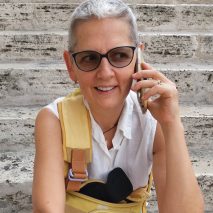
Sonia’s professional skills are the combination of the experience she has gained in different fields: multinationals and global NGOs, namely IBM and Amnesty International.
After more than 20 years at managerial level positions at IBM, mainly abroad, she has decided to dedicate her time and competencies to the passion of her life: human rights.
She became a member of Amnesty International when she was very young but started to also act as a full-time activist in the last 20 years, mainly in the field of human rights education and art.
In 2011, Sonia was elected to be part of the board to organize the Amnesty International General Assembly, and in 2012/2013, she was elected as a member of the Amnesty International Italy board. When Amnesty International celebrated its 50th anniversary with various global marketing activities, she had the pleasure to be chosen as part of the intercultural board of ART4Amnesty, led by Bill Shipsey in London.
Her lighthouse has always been the respect of each single person and of all the human rights. Having this always in mind, she takes an enthusiastic approach to new activities and projects, applying a spirit of initiative and good organization skills.

Tatiana is an activist, cultural events promoter, teacher, and former Mayor of Auronzo di Cadore in the Italian Dolomites, eager to contribute to Art For Human Rights’ future projects. She graduated in Foreign Languages and Literatures with a thesis dedicated to the connection between U2’s music and the great Irish writers and thinkers. Through this work, she had the opportunity to meet and interview Bono and The Edge, establishing a friendship with them.
She conceived a series of meetings called “The World is Yours, You Can Change” aimed at students, and she is the visionary behind the two 6,000-person embraces of Tre Cime di Lavaredo, the mountains symbolizing peace, justice, and freedom for the people of the world: two human chains called “The Dolomites Embrace Africa” and “The Dolomites Embrace Human Rights,” the latter organized together with Bill Shipsey, Art For Amnesty, and Amnesty Italy. Both events were supported by U2, who promoted them on their official website.
Since 2012, she has collaborated with Bill Shipsey across many events. As Mayor, she co-conceived with Bill a project unique in the world: a 30 km Human Rights bike trail from Auronzo to Misurina, dedicated to the UDHR, with a marker placed every kilometer inscribed with a word corresponding to each of the 30 articles of the Declaration.
An interesting fact about Tatiana: in 2018, during a U2 concert at the Assago Forum, Bono publicly acknowledged and thanked her on behalf of the band during his speech dedicated to the “Women of the World,” just before performing One.

Elizabeth is a half-French, half-Irish European Political Science student currently completing her bachelor’s degree at ESPOL in Lille. She is spending her final year abroad in Istanbul as part of an Erasmus exchange at Galatasaray University.
Passionate about diplomacy and the United Nations, she has participated in numerous Model United Nations conferences such as PIMUN, LIMUN, SPLIMUN, and MUNOPOL, experiences that have strengthened her interest in international affairs and debate. She also served as head of the training department in her MUN association, where she helped prepare new delegates.
Growing up in a multicultural family has made her particularly sensitive to issues related to human rights, migration, and asylum. These themes guide her academic focus and fuel her ambition to work in the field of migrant protection and humanitarian advocacy.
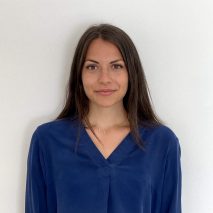
Ema is passionate about cultural diplomacy and deeply believes in the unifying power of the arts. A member of Amnesty International since the age of 14, she sees culture as a catalyst for connection and social change—fostering empathy, sparking dialogue, and bridging global understanding.
With a multicultural background as a French-Slovenian national, Ema brings a nuanced perspective to intercultural exchange and collaboration. She holds a Master’s degree in European Affairs from Sciences Po Paris, specializing in cultural policies and management.
Ema first joined AFHR in 2020 as an intern, later taking on the role of project manager. After completing her studies and gaining professional experience as an event manager, she returned to the AFHR team, continuing her work at the intersection of arts, culture, and human rights.

Anna Durante was raised in Paris in a French-Irish family, where she developed an early interest in social justice and human rights. She holds a BA in International Relations from Queen Mary University of London and an LLM in International Law from the University of Edinburgh.
She joined Art for Human Rights in 2025, contributing to projects that reflect her academic background and ongoing commitment to human rights.

Remy Gutterman is an American student who is currently finishing her Journalism Bachelor’s degree at UMass Amherst. Remy spent her Junior year studying abroad in Paris, taking classes at Institut de Catholique. During this time, she interned with the Art for Human Rights Team.
As a former pre-professional ballerina, Remy has a deep respect for all forms of artistry. She believes that art and performance are among the most fundamental pillars for raising awareness of human rights. This intersection of artistic passion and human rights advocacy is what drew Remy to Art for Human Rights, where she is inspired by the organization’s commitment to meaningful action and global awareness.
BOARD

Josefina Salomon is a journalist, editor and researcher.
Over the last two decades, she has lived and travelled extensively across Latin America documenting human rights, organised crime and security issues for research and advocacy work for media outlets and organisations including Amnesty International, InSight Crime, the Global Initiative against Transnational Organized Crime and the Washington Office on Latin America, among others.
More recently, she co-founded In.Visibles, a digital platform amplifying the stories of people caught up between violence at the hands of criminal organisations and government policies that criminalise them. Josefina first started collaborating with Art for Human Rights (then Art for Amnesty) in 2006, when then Chilean President Michelle Bachelet presented Amnesty International’s Ambassador of Conscience award to the Irish band U2. Since then, she helped the organisation advance collaborations with artists from across the world to raise awareness and inspire action for human rights to be a reality for all.

Jenny Bulbulia is a seasoned board member having sat on numerous state boards as an appointee of the Irish Government and the boards of several charities and companies. She was previously a Central Council Member of the Irish Red Cross and its Honorary Secretary.
As a barrister, she worked for over two decades in the area of child law.
Jenny studied psychology in Trinity College Dublin. Her work in psychology involved the promotion of professional wellbeing with an emphasis on professions who may be susceptible to vicarious trauma.
Jenny’s golden place is walking the fields with her dogs and spending time with her daughter and her horses. She also finds great escape in paintings, books and the performing arts.

Stephanie is a brand strategist. Born in Louisiana and raised in Texas, she’s spent her adult life in Europe. She began her working life at Amnesty International’s International Secretariat in London, before moving on to work at some of the world’s best creative agencies.
Most recently, she was Executive Strategy Director and Partner at 72andSunny Amsterdam, where she sat on the leadership team for the better part of a decade, helping the agency grow from a 5-person start-up to Agency of the Year.
The brains behind the growth & transformation of some of the world’s most innovative & impactful brands, from Google to the Tate Museums, Stephanie now works independently, helping start-ups and scale-ups become brands that last. She is also a published poet.

Barbara Bartoli is a marketing and communications expert, an idealist and a visionary with more than 20 years of experience working across the profit and non for profit sectors.
She helps brands redefine success beyond profit with a view of building a more inclusive and sustainable society with a people-centred approach in Purpose House.
Furthermore, she teaches Green Marketing & Social Communication at the Unint University in Rome to inspire youngsters to cultivate their passions and talents to achieve the kind of impacts that help others and are respectful of the planet.
She joined Art for Human Rights (formerly Art for Amnesty) in 2019 as Board Communication Director, to help bring together artists, human rights organizations and the corporate world in the fight for a world where human rights are enjoyed by all.

Aside from being one of Art for Human Rights’ newest board directors, Alex Searle is a creative entrepreneur, storyteller, content creator and the art-loving, music-making host of the Art for Human Rights Podcast. His abilities and experience in launching startups and growing businesses has enabled him to contribute greatly to the Art for Human Rights team, and broadcast its important mission to new, larger audiences.
When he’s not hunched over his laptop creating something great, he’s usually playing lego or guitar with one of his little ones, or taking a roadtrip across Spain or Portugal to sample the local art, music, food and culture.